the life you can save se ru pl es br il fr it de cn cni nl ro ph dk kr jp sl pt
se
ru
pl
es
br
il
fr
it
de
cn
cni
nl
ro
ph
dk
kr
jp
sl
pt
TODAY IS .
MAKE IT THE DAY WHEN
YOU JOINED 12 938
OTHERS IN SAVING LIVES.
YOU CAN MAKE A DIFFERENCE.
IT ISN'T HARD TO DO.
Share the vision of a world without poverty.
Share on Twitter Share on Facebook Digg this! Digg this! Bookmark this on Delicious
Welcome

When researchers asked poor people in 73 different countries what poverty meant to them, they said it meant these things:

- You are short of food for all or part of the year, often eating only one meal per day, sometimes having to choose between stilling your child’s hunger or your own, and sometimes being able to do neither.

- You can’t save money. If a family member falls ill and you need money to see a doctor, or if the crop fails and you have nothing to eat, you have to borrow from a local moneylender and he will charge you so much interest that the debt continues to mount and you may never be free of it.

- You can’t afford to send your children to school, or if they do start school, you have to take them out again if the harvest is poor.

- You live in an unstable house, made with mud or thatch that you need to rebuild every two or three years, or after severe weather.

- You have no close source of safe drinking water. You have to carry it a long way, and even then, it can make you ill unless you boil it.

But extreme poverty is not only having unsatisfied material needs. It is often accompanied by a degrading state of powerlessness. Even in countries that are democracies and relatively well-governed, poor people described a range of situations in which they had to accept humiliation without protest. If someone takes what little you have, and you complain to the police, they may not listen to you. Nor will the law necessarily protect you from rape or sexual harassment if you are a woman. You have a pervading sense of shame and failure because you cannot provide for your children. Your poverty traps you and you lose hope of ever escaping from a life of hard work for which, at the end, you will have nothing to show beyond bare survival.

The number of people currently living in such conditions is 1.4 billion. This is bad, but not as bad as things were in 1981, when there were 1.9 billion people living in extreme poverty. That was about 4 in every 10 people in the world, whereas now fewer than 1 in 4 are extremely poor. We can help to cut this number further, and faster - and that is what we ought to be doing. Read about the idea and why to pledge here.

WE Are Making a Difference
See how much money is being generated by all of the pledges we have received. (This is a conservative estimate, assuming the average income in each bracket and that only the minimal amount is donated - many people give much more and give regularly.)
report

May Report:

$ 782 752.00

And the total since we set up this website in February 2009:

$ 64 998 305.00

Find out more
book

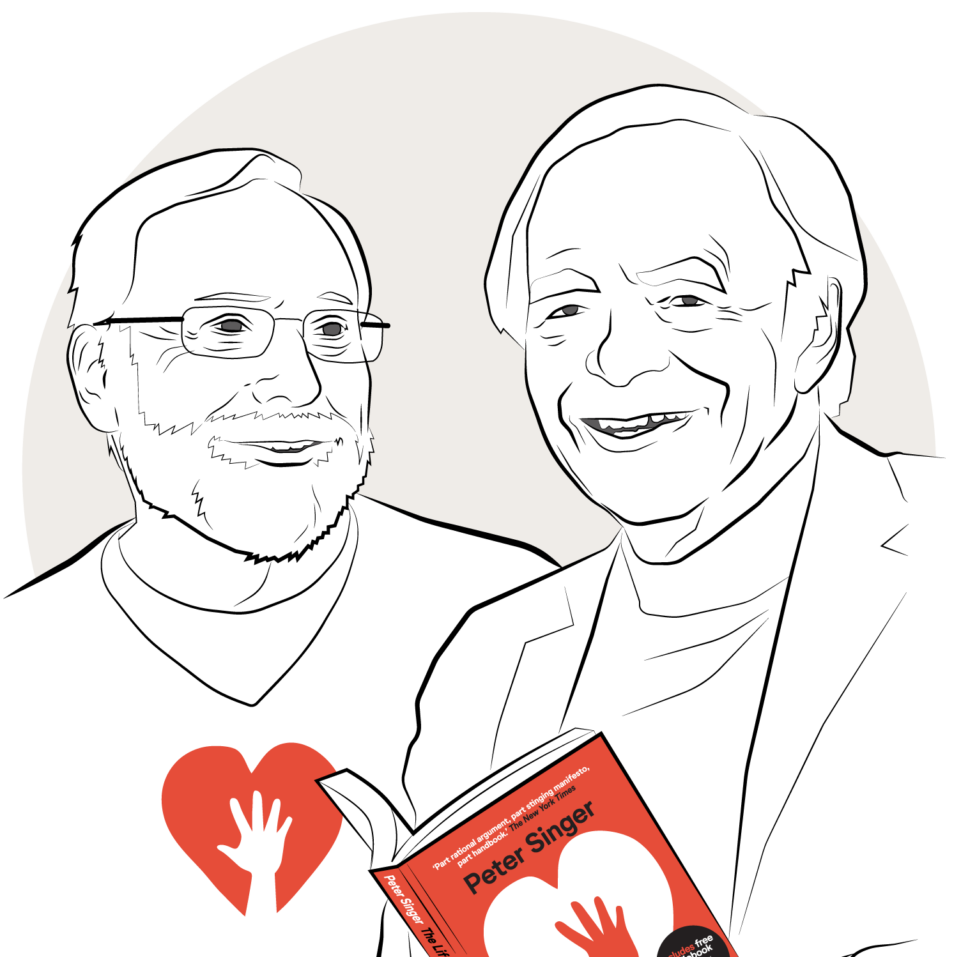
The Life You Can Save

How to Do Your Part to End World Poverty

Peter Singer

Random House,
New York, 2010

Buy it now!

For other editions and translations into various languages, click here